Home › Concrete Sidewalk and Walkway
We install safe, durable concrete sidewalk and walkway solutions for homes in Greensboro, NC. From front walkways to garden paths and side yard connectors, we pour concrete paths that drain correctly and resist cracking. Contact us for a free concrete sidewalk estimate and layout planning.
Superior Concrete Greensboro provides professional concrete sidewalk throughout Greensboro, NC, North Carolina and the surrounding area. Our licensed, insured crew delivers safe, clean, on-time work with a free estimate before anything begins. Call (336) 814-8750 or request your free quote.
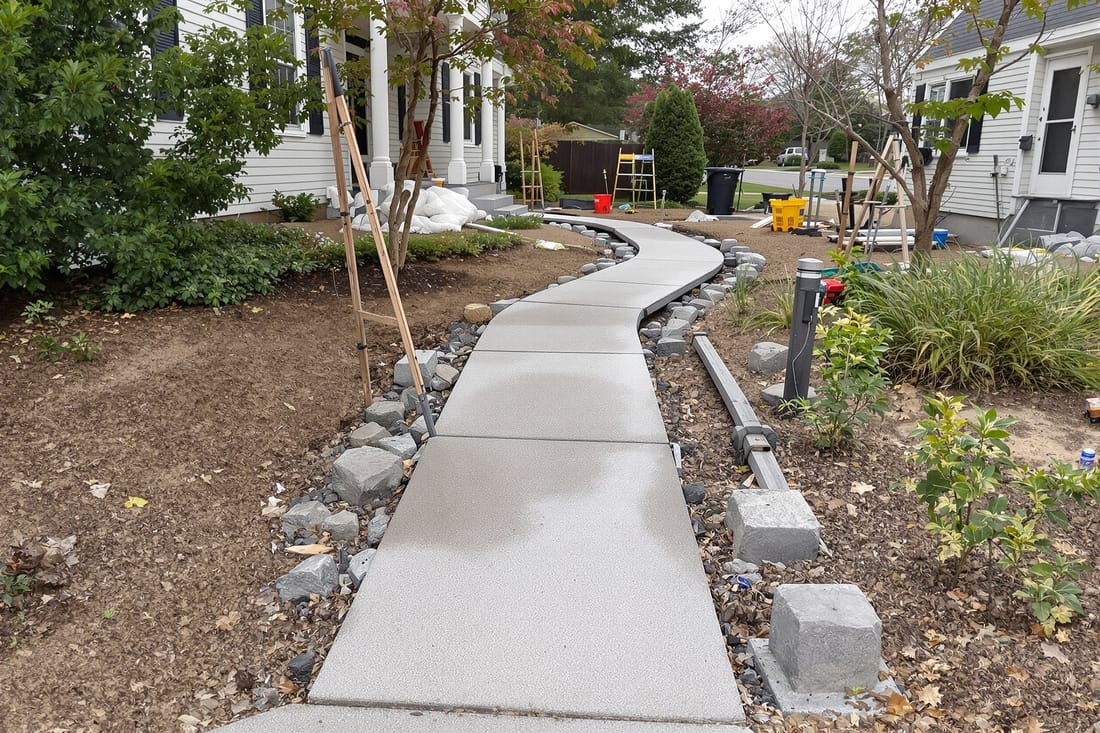
Concrete sidewalk and walkway experts in Greensboro
If you are planning a new concrete sidewalk or walkway in Greensboro, you need a contractor who understands both the materials and the local conditions. Superior Concrete Greensboro focuses on functional walks that drain correctly, stand up to traffic, and handle our hot summers and freeze-thaw cycles.
We start by asking how the sidewalk will be used. A front entry walk for guests, a side path for trash cans, or a backyard connection to a patio all need different widths, finishes, and layout. We look at existing elevations, where water currently flows, tree locations, and any trip hazards. This allows us to design a layout that looks good and does not cause pooling water or future cracking next to foundations.
Our team is familiar with Greensboro and Guilford County requirements, including typical sidewalk thickness, control joint spacing, and clearance needs in residential neighborhoods. We can match the look of nearby city sidewalks where required, or give you a custom residential design on private property that stands apart while still being built correctly.
How we build a long lasting concrete sidewalk
A durable concrete sidewalk in Greensboro starts with the base. We remove grass, roots, and any soft soil, then cut down to the proper depth so the final surface ends up at the right height relative to your driveway, street curb, or doorway. For most walks, we install and compact a gravel base, usually 4 inches of compacted crushed stone, to prevent settling and frost heave.
We set forms with straight lines or smooth curves, depending on your design, using lumber or steel forms staked securely so they do not move during the pour. We check slope with a level to make sure water runs away from your house and does not pond on the sidewalk. In Greensboro we typically aim for between 1 and 2 percent fall for most walks, which is enough for drainage without feeling sloped underfoot.
For the concrete itself, we use mixes suited to our climate, typically a 3,500 to 4,000 psi mix with air entrainment to help resist freeze-thaw damage. On longer or heavier traffic walks we often recommend fiber reinforcement in the mix, and in some cases rebar or wire mesh, especially at driveway crossings or where heavy service vehicles may roll over the walk. After placing the concrete, we screed to level it, bull float the surface to bring up a paste, then cut in control joints at proper spacing before final finishing.
Finishing usually means a broom finish for sidewalks, which provides slip resistance during rain or when we occasionally get ice. Edges are tooled for a clean, rounded profile that resists chipping. Once finishing is complete, we cure the concrete by applying a curing compound or keeping it damp, depending on weather, because proper curing is what gives the slab its strength and reduces early shrinkage cracking.
Design options for new sidewalks and walkways
A sidewalk does not have to look like a plain straight gray strip. Superior Concrete Greensboro offers several design options that work well in local neighborhoods and still meet practical needs.
Width is the first decision. Standard residential sidewalks are usually 4 feet wide, but if you expect two people to walk side by side comfortably, 5 feet feels better. For front entry walks, many Greensboro homeowners choose a wider pad or small landing near the steps or porch to create a more welcoming feel.
We can form gentle curves around landscaping, trees, or flower beds instead of cutting straight through the yard. Curved walks often blend better with existing lawns and make it easier to mow. Where roots from oaks or maples are a concern, we look at root paths and may adjust the alignment or install root barriers to reduce future lifting of the concrete.
For appearance, options include simple broom finish, bordered edges, and exposed aggregate or stamped accents at the entry area. While a full stamped sidewalk is possible, many customers choose to keep most of the path broom finished for traction and durability, and add decorative concrete only at focal points. Color additives and integral pigments can be used, but we will explain how darker colors can warm up in summer sun and how sealers may need periodic maintenance.
We also look at how the sidewalk ties into existing concrete, such as driveways or city sidewalks at the street. Matching joint layout, finish texture, and elevation makes the new work look like it belongs instead of an afterthought.
What affects the cost of a concrete sidewalk in Greensboro
The cost of a concrete sidewalk project depends on more than just square footage. Superior Concrete Greensboro explains pricing upfront so you understand where your money is going.
Site access is one factor. A front yard sidewalk with direct truck access will cost less per square foot than a backyard walkway where concrete must be wheeled or pumped. Obstructions like fences, steep slopes, or tight side yards increase labor time.
Soil conditions also matter. If we encounter soft, organic, or previously filled soil, we may recommend digging deeper and adding more compacted stone to create a stable base. This prevents future settling and uneven panels, but it does add some cost. Likewise, areas that require significant tree root management, removal of old failing concrete, or relocation of irrigation heads will affect the total price.
Concrete thickness and reinforcement level play a role. A standard residential walkway is typically 4 inches thick. Sections that cross driveways, or walks that will see heavier use, may require thicker slabs or rebar grids, which increase materials and labor. Decorative options such as exposed aggregate, color concrete, or stamped borders require additional materials and finishing time and are priced accordingly.
Finally, timing and weather can influence scheduling. Busy seasons in Greensboro are usually spring and fall, when temperatures are ideal for concrete work. Booking ahead during those periods can secure better scheduling, while summer heat or winter cold may require additives or extra curing measures that we will discuss if your project is scheduled at those times.
Local climate, drainage, and common sidewalk issues
Greensboro’s weather creates specific challenges for sidewalks that we address in both design and construction. Our area gets a mix of heavy summer thunderstorms, occasional snow and ice, and freeze-thaw cycles that can stress concrete.
Drainage is critical. If your existing walkway has puddles that sit for days after rain, or if water flows toward your foundation, we correct the grade as part of the replacement. That can mean slightly adjusting sidewalk height, adding a gentle cross slope, or tying in small drains or swales nearby. This not only protects the concrete but also helps keep moisture away from crawlspaces and basements.
Freeze-thaw cycles can lead to surface spalling and cracks when water gets into tiny pores and joints. We use air-entrained concrete mixes and proper curing practices to reduce this risk, and we cut control joints at the right spacing so that when concrete does move, it cracks in planned locations instead of randomly. On long runs we plan expansion joints where the sidewalk meets steps, driveways, or other large slabs.
Tree roots are another frequent problem in Greensboro’s older neighborhoods. Raised and broken panels around mature trees can be tripping hazards. When we assess your project, we look at the species, size, and location of trees. Options might include rerouting the sidewalk around major root zones, root pruning where appropriate, or using thicker concrete and additional reinforcement in high risk areas. We balance protecting your trees with building a stable, safe walkway.
We also talk honestly about de-icing. Rock salt and some chemical de-icers are harsh on concrete surfaces, especially in the first winter after installation. We advise customers to use sand or gentler de-icers that are labeled as safe for concrete, and to avoid using metal shovels in a way that can chip edges.
What to expect when you hire Superior Concrete Greensboro
When you contact Superior Concrete Greensboro about a concrete sidewalk, we start with a site visit, not a guess over the phone. We measure the area, check grades, note drainage patterns, and ask how you plan to use the walk. Then we provide a written estimate that breaks down the main tasks, such as demolition, base preparation, forming, concrete placement, and finishing options.
Before work starts, we call in utility location services if any digging near lines is expected. We schedule your project around weather that is suitable for concrete placement. On pour day, we typically complete demolition, base prep, forming, and placement of the new sidewalk in one coordinated sequence, then rope off the area while it cures.
Most residential sidewalks can be walked on within about 24 to 48 hours under normal Greensboro conditions, although heavy loads should be kept off the slab for a week while it gains strength. We give you clear written care instructions, including when to water the surface in hot weather, when to avoid sealers, and how to handle the first winter.
If you are replacing an existing cracked and uneven sidewalk, we can usually remove and dispose of the old concrete as part of the job. We take care to minimize disturbance to your yard, and we backfill and clean up around the new walk so it is ready for you and your landscaper. Our goal is a sidewalk or walkway that looks right with your home, drains correctly, and stays solid for many years without surprises.