Home › Commercial Steps, Ramps, and Access Structures
Superior Concrete Greensboro builds commercial concrete steps, ramps, and access structures for businesses in Greensboro, NC. We construct entry stairs, service stairs, and access ramps that meet safety and code requirements. Our team coordinates with railings and door thresholds for smooth transitions. Improve access for staff and visitors with durable concrete steps and ramps.
Superior Concrete Greensboro provides professional commercial concrete steps throughout Greensboro, NC, North Carolina and the surrounding area. Our licensed, insured crew delivers safe, clean, on-time work with a free estimate before anything begins. Call (336) 814-8750 or request your free quote.
Commercial Concrete Steps, Ramps, and Access Structures in Greensboro
If your business needs safe, durable access for customers or employees, the way your commercial concrete steps and ramps are designed matters more than most people realize. At Superior Concrete Greensboro, we focus on code-compliant, low‑maintenance access structures that fit how your property is actually used, not just how it looks on a drawing.
In Greensboro and the surrounding Triad, that means planning for frequent rain, hot summers, occasional ice, and heavy foot traffic. We start every project with a site walk, looking at slope, drainage paths, door thresholds, and how people currently move through your property. Then we talk through what you need: standard entry steps, ADA‑compliant ramps, loading area access, or a mix of all three.
From there, we lay out a design that lines up with city inspections and the North Carolina Building Code, including proper tread and riser dimensions, ramp slopes, landings, and handrail requirements. Our goal is straightforward. Your new steps or ramps should pass inspection the first time, be easy for people to use, and hold up to years of weather and wear without constant repairs.
How We Design and Build Commercial Concrete Steps
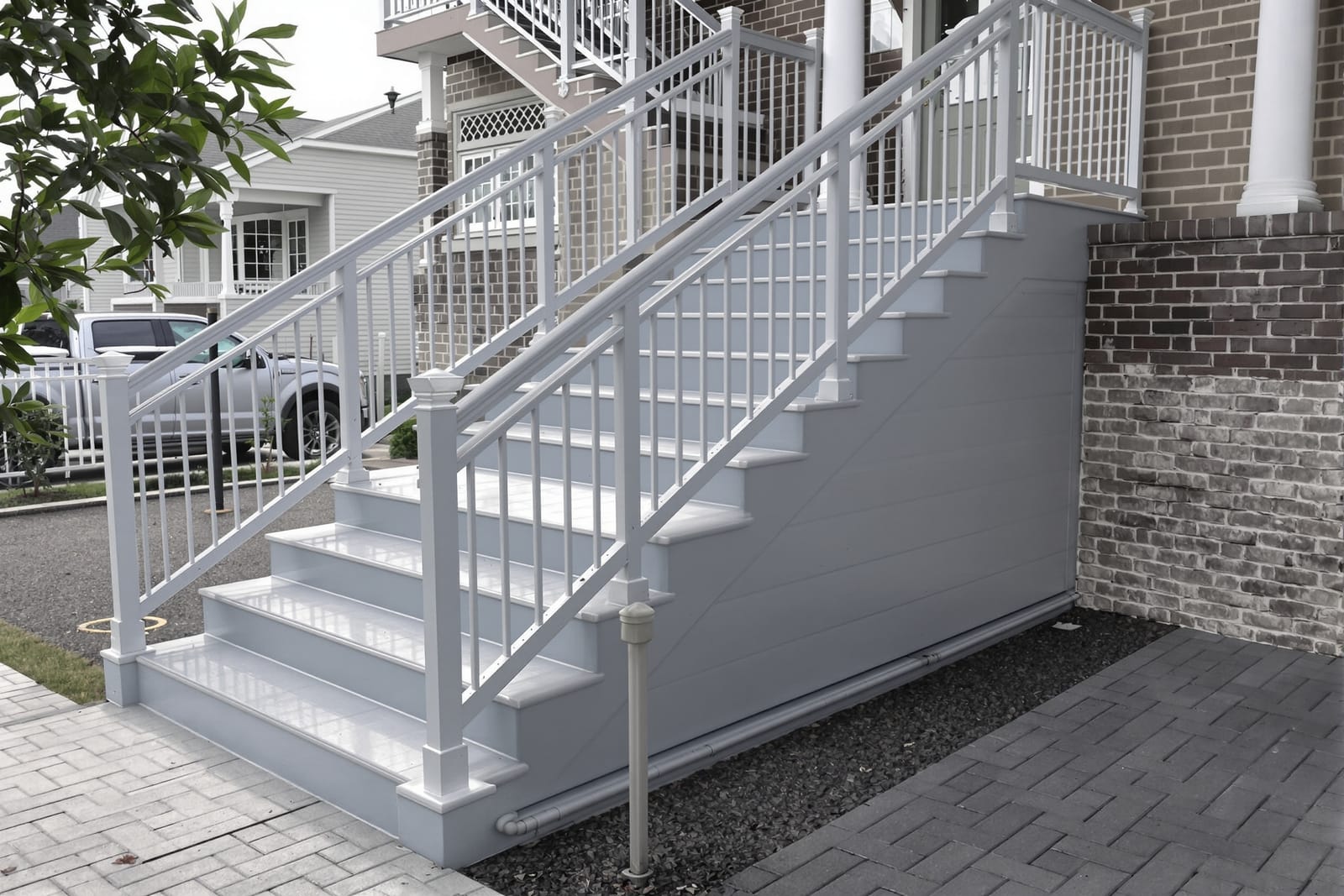
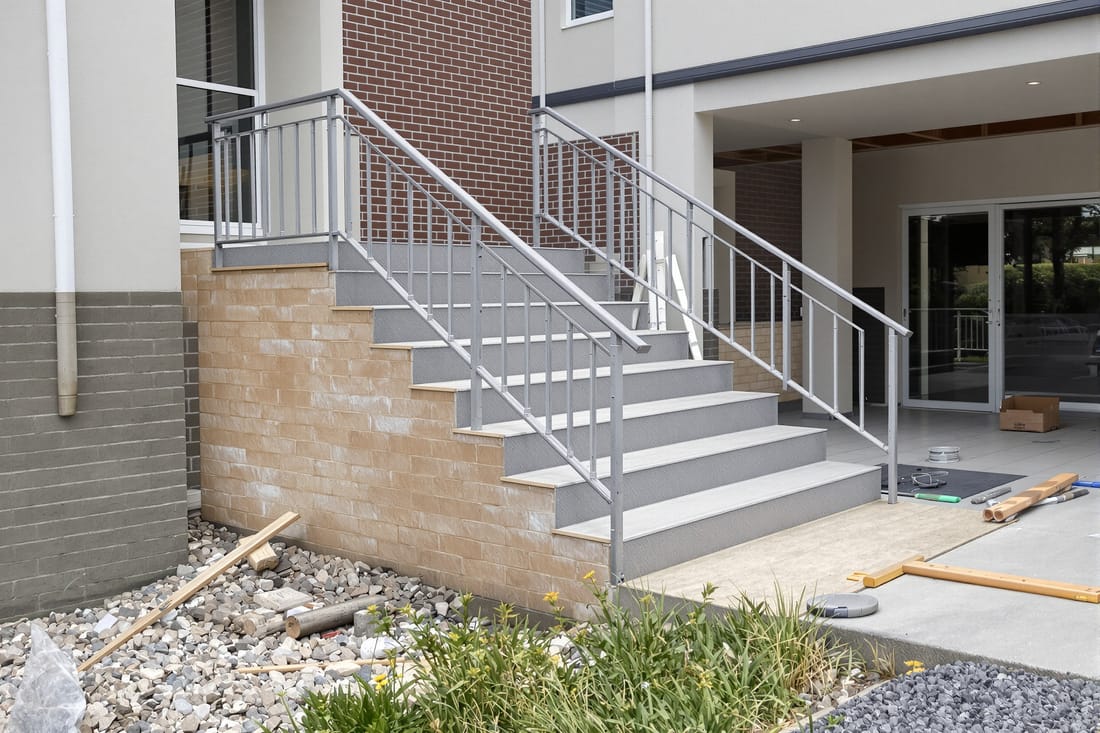
For commercial concrete steps, we start by confirming clear dimensions. Typical riser heights are 4 to 7 inches, with treads 11 inches or deeper, but we adjust within code to match your door height and site slope. Uniformity is critical. One riser that is even half an inch off can be a trip hazard, so we check elevations multiple times before we ever pour.
We then build solid forms and, if needed, integrate the steps with existing slabs or stoops. For most commercial sites in Greensboro, we use 3,500 to 4,000 PSI concrete with air entrainment to handle freeze‑thaw cycles. We install rebar or wire mesh in the step structure so it can handle heavy daily use and occasional impacts, like hand trucks or carts.
Finish texture is not just cosmetic. For business entrances, we typically recommend a broom finish perpendicular to the direction of travel, which gives better traction when wet. At medical offices, schools, and multifamily buildings, we often add nosing detail or a contrasting edge strip to help visually impaired users see each step clearly.
We also pay close attention to water. Steps that hold water near the door can cause slick surfaces and foundation issues. We set slight pitch on treads to shed water and, where needed, add drains or adjust nearby grading so rain moves away from the building instead of pooling at the entry.
Concrete Ramps and ADA‑Compliant Access
Ramps and access structures need a different approach than simple stairs. For most commercial projects, the driving factor is ADA compliance and practical usability. In Greensboro, inspectors typically look for a maximum slope of 1:12 for wheelchair ramps, meaning 1 inch of rise for every 12 inches of run, along with proper landings and handrails.
At Superior Concrete Greensboro, we start by measuring the vertical rise from ground level to the threshold or destination point. From that number, we calculate the minimum ramp length and discuss layout options. Sometimes a straight run works. On tighter sites, we may propose L‑shaped or switchback ramps with level landings to stay within slope limits while fitting in the available space.
We use reinforced concrete slabs for ramps, often 4 to 6 inches thick depending on the expected load. For locations that will see carts or light equipment, such as small warehouses or retail stock doors, we size the slab and reinforcement to carry those loads without cracking. Expansion joints are placed at logical breaks, such as transitions to sidewalks, existing slabs, or building foundations.
Surface texture on ramps is critical. We usually specify a medium broom finish, not too smooth and not overly rough. For shaded or always‑damp areas, we may add a slightly more aggressive finish or discuss non‑slip treatments to reduce risk when algae or pollen build up. Edge protection, curbs, or wheel stops are added where there is a drop‑off that could be hazardous to wheelchairs or carts.
We coordinate ramp details like clear width, handrails, and guardrails with local inspectors so you are not surprised at the final walk‑through. The aim is simple. People using mobility devices should be able to get in and out of your building without struggling, regardless of the weather.
What Affects Cost and Timeline in Greensboro
For commercial concrete steps and ramps, price is driven by more than just square footage. The largest cost drivers are site prep, elevation changes, layout complexity, reinforcement needs, and required finishes or railings.
Site prep in Greensboro can vary a lot. Some properties have firm, well‑draining red clay that needs minimal work. Others sit on fill dirt or soft spots that require excavation and compacted stone base to prevent settlement. If we discover poor subgrade during the initial visit, we will explain what is needed so the new structure does not sink or crack.
Elevation changes matter too. A simple three‑step entry with a short landing costs much less than a long ramp system with multiple turns and landings. Adding features like integrated retaining walls, trench drains, or decorative finishes such as colored concrete or exposed aggregate will also increase cost.
Timing is another practical factor. In Greensboro, the most predictable months for concrete work are typically March through early June, then September through early November. Summer heat can cause the surface to dry too quickly, which we manage with water curing and timing pours earlier in the day. Winter pours may require cold‑weather measures like blankets or accelerators if overnight temperatures drop near freezing. These conditions do not stop the work, but they can affect scheduling and, in some cases, cost.
Permitting and inspections are also part of the picture for commercial properties. For many projects, we coordinate with the city on permits related to accessibility changes, especially when tying into public sidewalks or rights of way. We build in time for inspections so your project can pass without delays at opening or re‑inspection.
Common Problems We Solve and How to Get Started
A lot of our commercial work in Greensboro involves correcting older steps or ramps that no longer meet code or are failing due to poor construction. Common issues include steps with inconsistent riser heights, slick or crumbling surfaces, ramps that are too steep, ponding water at doorways, and cracked landings pulling away from the building.
When we evaluate an existing structure, we look at whether repair or full replacement makes more sense. Small surface damage can sometimes be addressed with patching and resurfacing, but if the underlying concrete is poorly reinforced, poorly sloped, or severely cracked, we usually recommend removal and replacement. It is often more cost‑effective to fix it correctly once than to keep patching a bad base.
We also help property managers plan phased work. For busy businesses, like medical offices or retail centers, we can sequence pours to keep at least one entry usable, sometimes with temporary access solutions while the main steps or ramps are being rebuilt.
If you are considering new commercial concrete steps, ramps, or access structures, it helps to gather a few pieces of information up front. Note where water tends to collect during heavy rain, how delivery traffic uses the area, and any accessibility complaints you have received from visitors or staff. Photos of the existing conditions, along with basic measurements of rises and runs, can speed up the initial planning.
From there, Superior Concrete Greensboro can provide a clear scope, layout recommendations, and a written estimate. The aim is for you to know exactly what will be built, how long it will take, and how it will perform for the long term before we ever set a form or pour a yard of concrete.